

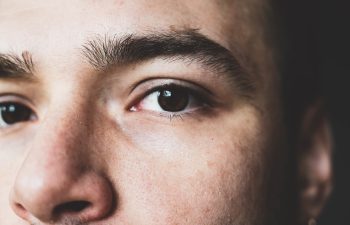
If your upper eyelids are starting to droop, it’s easy to assume it’s just a normal part of aging. But not all drooping eyelids are the same. Two common conditions, ptosis and dermatochalasis, can look similar but have very different causes and treatments. At the practice of Dr. Joseph J. Rousso in New York City, patients receive precise diagnoses and customized surgical solutions based on the underlying issue.
What Is Dermatochalasis?
Dermatochalasis refers to excess, sagging skin of the upper eyelids. It’s most often caused by aging, as skin loses elasticity over time. Genetics, sun exposure, and lifestyle factors can also contribute.
This condition is extremely common. Studies estimate that a majority of adults over age 50 experience some degree of eyelid skin laxity. While it’s often considered a cosmetic concern, severe dermatochalasis can interfere with vision by blocking the upper field of view.
Patients typically notice loose, crepey skin that folds over the eyelid. Makeup may become harder to apply, and the eyes can appear tired or aged even when you feel well-rested.
What Is Ptosis?
Ptosis, on the other hand, is a medical condition involving the eyelid muscle itself. Specifically, it occurs when the levator muscle, which lifts the eyelid, weakens or detaches. This leads to a drooping eyelid that sits lower than normal.
Ptosis can affect one or both eyes and may be present at birth or develop later in life. According to the American Academy of Ophthalmology, age-related ptosis is one of the most common forms, especially in adults over 60.
Unlike dermatochalasis, ptosis often impacts vision more directly. Patients may find themselves raising their eyebrows or tilting their head back to see clearly. In more advanced cases, the eyelid can partially cover the pupil.
Key Differences Between the Two
While both conditions cause a droopy appearance, the difference comes down to structure. Dermatochalasis involves excess skin, while ptosis involves muscle weakness. In some cases, patients may have both conditions at the same time, which makes proper evaluation even more important.
A detailed exam is needed to determine whether the issue is skin, muscle, or a combination of both. Treating the wrong condition can lead to unsatisfactory results.
How These Conditions Are Treated
Surgical correction depends on the diagnosis. Dermatochalasis is typically treated with an upper blepharoplasty, a procedure that removes excess skin and restores a smoother, more youthful eyelid contour. This not only improves appearance but can also expand the visual field when sagging skin is obstructing vision.
Ptosis requires a different approach. Ptosis repair focuses on tightening or reattaching the levator muscle so the eyelid can lift properly again. This is a more functional procedure, often performed to restore normal vision as well as symmetry.
When both conditions are present, the procedures can be combined to achieve a comprehensive result.
Expertise Matters
Dr. Rousso is a double board-certified, internationally recognized expert in facial plastic and reconstructive surgery, with a private practice in Manhattan’s Gramercy neighborhood. His experience allows him to accurately distinguish between ptosis and dermatochalasis and recommend the most effective treatment for each patient.
If your eyelids are drooping, the cause matters. A proper diagnosis ensures you receive the right procedure, not just a temporary fix, but a result that improves both function and appearance. Call the office of Dr. Joseph J. Rousso, MD, FACS, to schedule your droopy eyelid consultation.